
Welcome to the "Mini-Chem" column!
In recent articles, we explored various topics concerning Nutritional Physiology; now we are launching a new series on Food Chemistry, titled Minichimica. With this mini-series, we will debunk common myths and scientifically analyze the most important molecules for our training and nutrition.
Let's start with the king of supplements: Creatine.
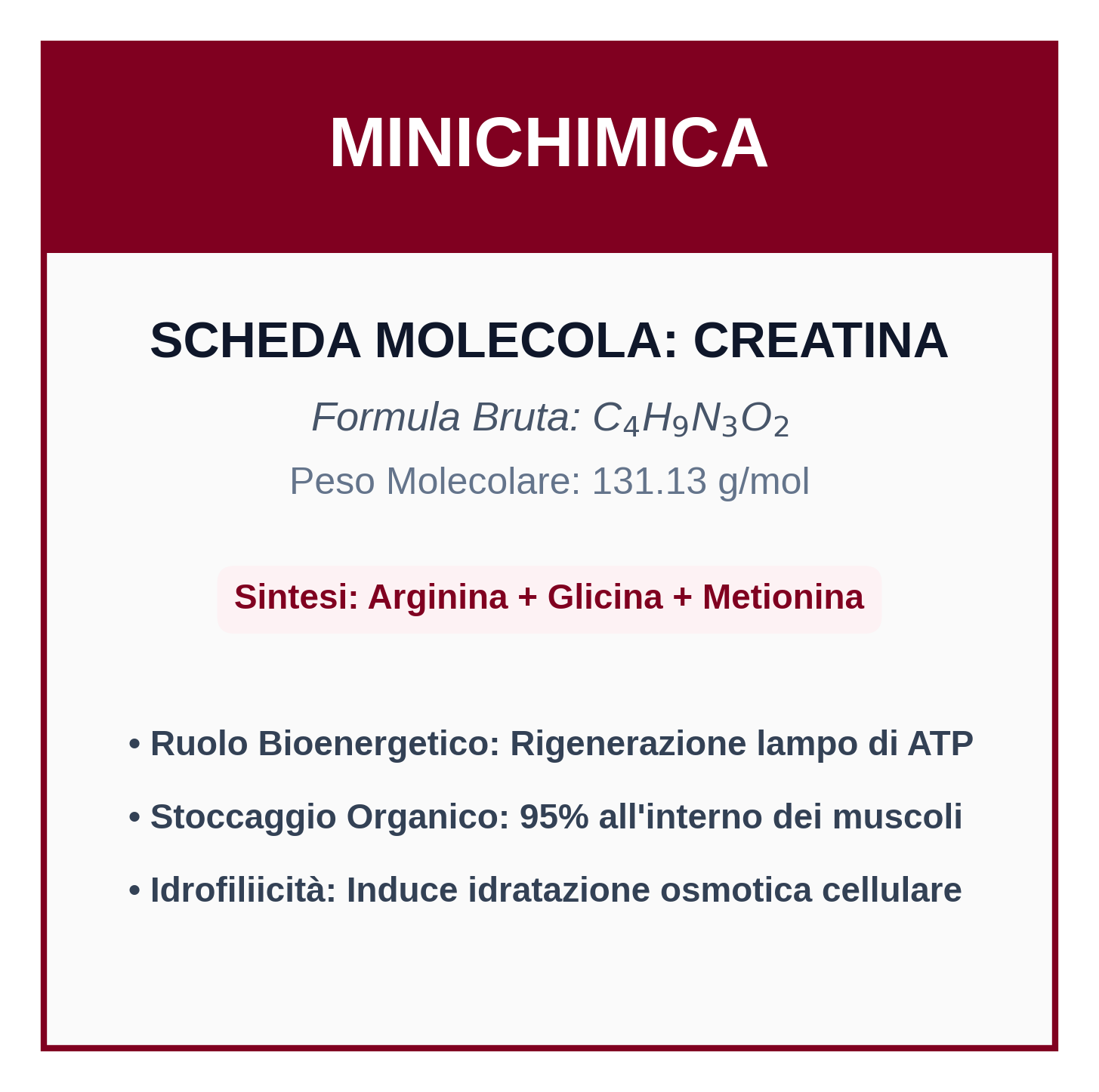
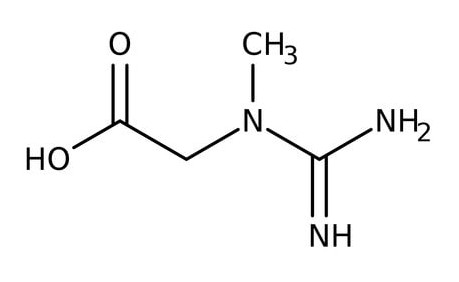
From a chemical standpoint, it is not a protein, but an amino acid derivative synthesized from three amino acids: arginine, glycine, and methionine. Our body produces it naturally (mainly in the liver) and stores 95% of it in muscles in the form of Phosphocreatine.
What does it do in simple terms?
When you engage in explosive, maximal effort (like a heavy rep or a sprint), your cells instantly consume readily available energy (ATP). Phosphocreatine steps in by donating its phosphate group to regenerate ATP in just a few seconds.
The higher your muscle creatine stores, the longer you can maintain that peak intensity before fatigue sets in. Additionally, it draws water into muscle cells (intracellular hydration), making the muscle biochemically stronger and more efficient.
Chemistry applied to practice: 3 key takeaways
1. Chemistry on the plate (Sources): Creatine is found mainly in red meat and fish. However, to get an effective dose of about 4-5 grams, you would need to eat nearly a kilogram of raw beef. Definitely impractical (and hard to digest) before heading into the weight room—which is why supplementation is the most logical route.
2. Mind the stability (Creatine vs Creatinine): A neat lab fact: in an aqueous environment at room temperature, creatine is unstable. It undergoes a spontaneous and irreversible cyclization reaction, converting into creatinine, a metabolic waste product excreted by the kidneys. Golden rule: don't mix your shaker hours in advance—drink it right away.
3. How does it enter the muscle? (Transporters and Insulin): This molecule doesn't enter muscle cells by magic; it crosses the membrane via a specific sodium-chloride-dependent transporter (called CreaT). This process is strongly stimulated by insulin. For this reason, taking it alongside a serving of carbohydrates enhances cellular uptake thanks to the insulin spike.
See you in the next Minichimica article, and have a great workout!
Source: Adapted from notes of the Food Chemistry course (Faculty of Pharmacy).
- Gloria Carli's Blog
- Log in or register to post comments
